Delta 8 Information
It has become increasingly common to label products containing Delta-8 as “hemp products,” which can be misleading for consumers who associate “hemp” with “non-psychoactive.” It’s important to know that Delta-8 THC has psychoactive and intoxicating effects.
Additionally, the FDA is concerned about the growing number of Delta-8 THC products marketed for therapeutic or medical purposes, as they have not been proven to be safe or effective and can, therefore, put consumers at risk.THC likely exposes consumers to much higher levels of the substance than are naturally occurring in hemp cannabis raw extract. Shockingly, studies have shown that 55% of Delta-8 THC consumption resulted in intervention, such as evaluation by emergency medical services or hospital admission.
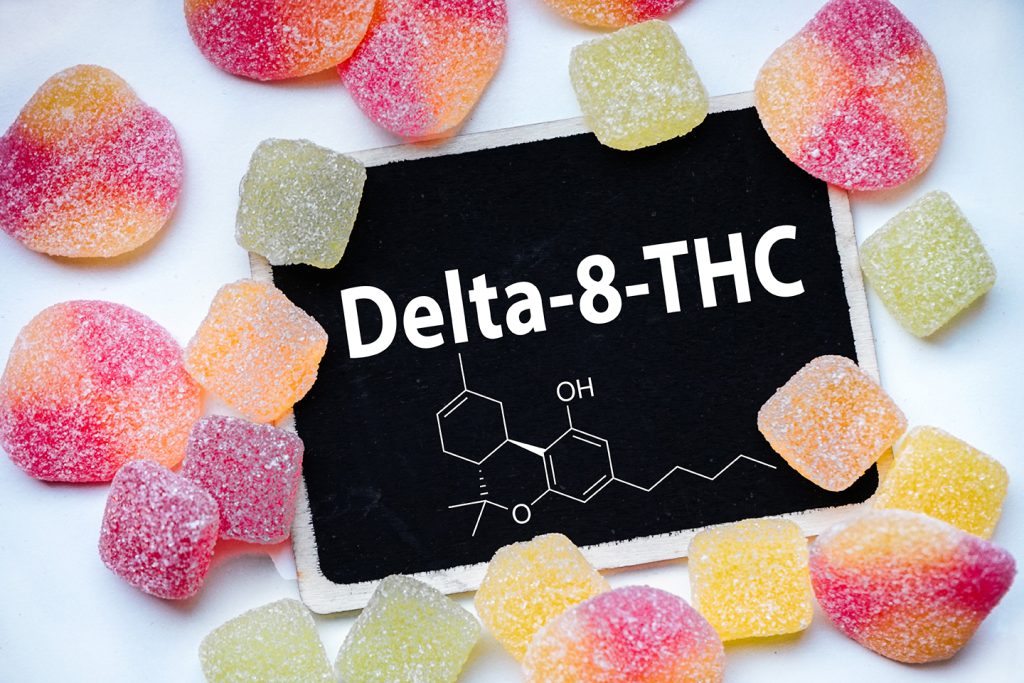
It is more probable for teenagers and children to consume Delta-8 in edibles rather than vaping. Like CBD and THC, Delta-8 is commonly found in brownies, cookies, gummies, and other snacks. These edible flavors make it easier for teenagers to consume high doses without realizing it. Because teenagers’ and children’s bodies are smaller than those of adults, they are more susceptible to side effects.
Currently, no federal regulations establish a minimum age for purchasing delta-8. However, some stores may require the purchaser to be 18 years old. Delta-8 can be easily purchased online, and there are no clear guidelines or regulations regarding labeling and packaging. As a result, it can be easily accessible to teenagers and children in gas stations, smoke shops, and other stores.
“What actions can parents take to address the situation?”
Always lock away your Delta-8 and related substances.
Physicians often find minors seeking treatment for Delta-8 effects after accessing adults’ supplies.
Discuss the dangers of Delta-8 and related products with your teenagers.
EPIC prevention team can help start the conversation.
Stay informed about Delta-8 by regularly checking reliable sources like the FDA and FADAA websites.