The 8 dimensions of wellness are:
-
-
- There are 8 different dimensions of wellness.
- Emotional/Mental
- Financial
- Environmental
- Intellectual
- Social
- Occupational
- Physical
- Spiritual
- Emotional/Mental
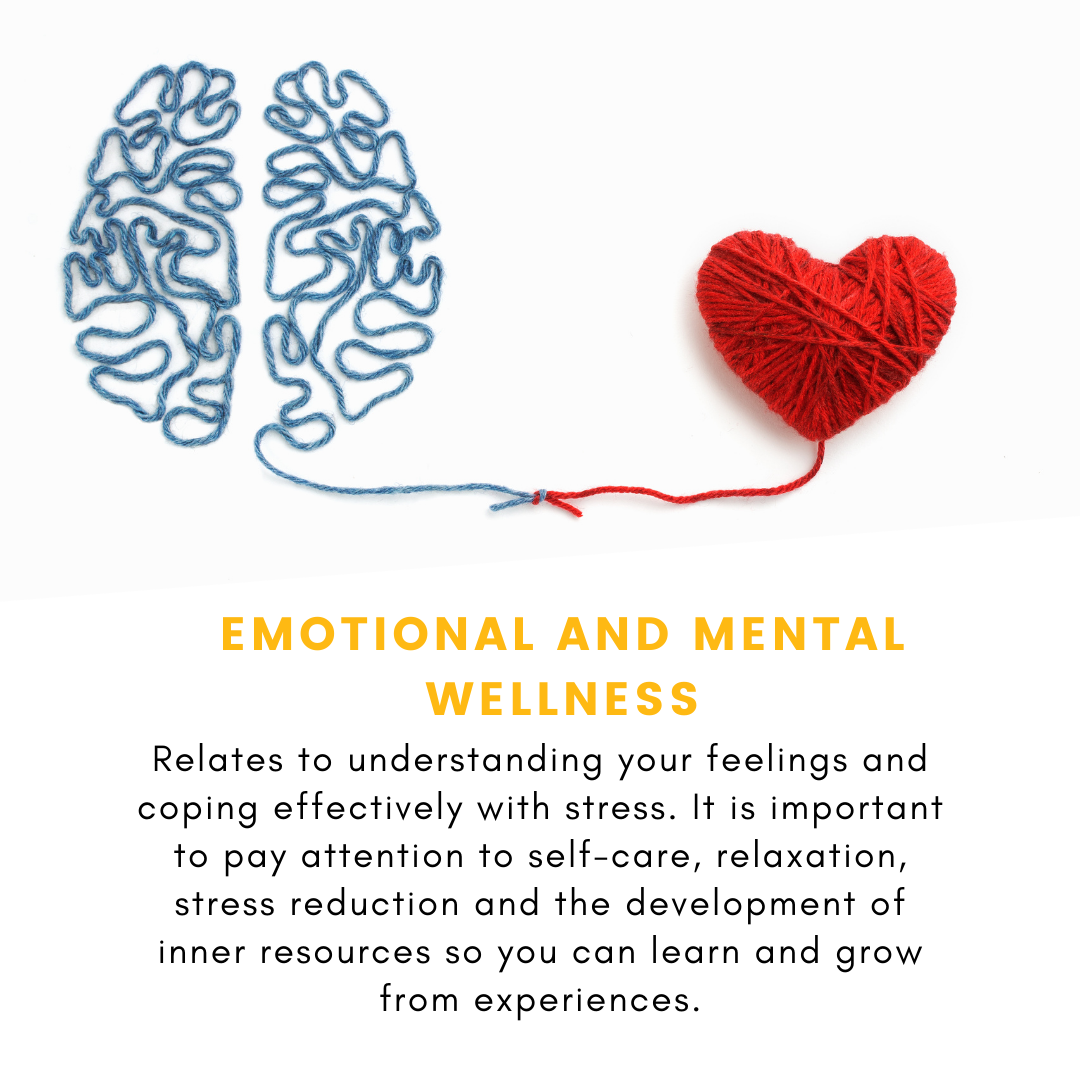
- Relates to understanding your feelings and coping effectively with stress. It is important to pay attention to self-care, relaxation, stress reduction and the development of inner resources so you can learn and grow from experiences. Emotional Wellness includes:
- Having healthy relationships
- Being able to ask for help.
- Being resilient
- Being aware of your feelings
- Expressing your feelings to people you trust
- Seeking support with upsetting emotions
- Learning your strengths
- Working on things you want to improve.
- The ability to express a wide range of emotions such as happiness, sadness, anger, joy, fear, frustration, gratitude, etc.
- Developing assertiveness
- Having a positive self-image
- Spiritual Wellness
- Allows you to develop a set of values that help you seek meaning and purpose. Spirituality can be represented in many ways, for example, through relaxation or religion. But being spiritually well means knowing which resources to use to cope with issues that come up in everyday life. Spiritual Wellness includes:
- Making time for activities that enhance your sense of connection to yourself, to nature, and to others
- Having a healthy relationship with nature
- Discovering your values, principles and beliefs
- Being part of a like-minded community
- Helping others who are in need
- Accepting others for who they are
- Having a greater purpose
- Exploring your personal values
- Searching for a meaning for your life
- Being aware of how your values may differ from others
- Religious or otherwise spiritual activities and practices
- Taking time for yourself and embracing silence and solitude
- Intellectual Wellness
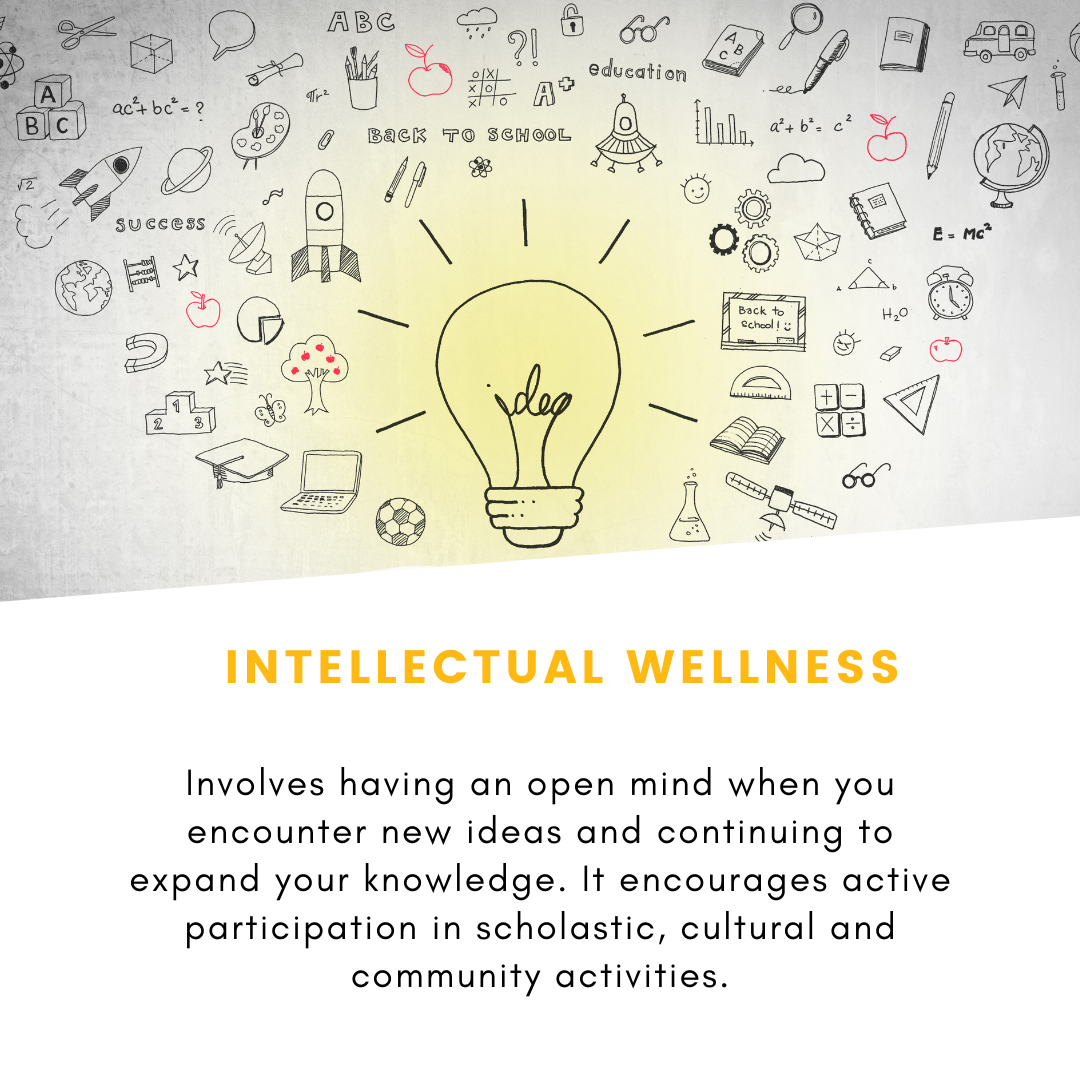
- Involves having an open mind when you encounter new ideas and continuing to expand your knowledge. It encourages active participation in scholastic, cultural and community activities. Intellectual Wellness includes:
- Using your creative abilities
- Exercising critical thinking skills
- Being a lifetime learner
- Engaging in books, articles, or other content that interests you
- Exploring public/community events
- Focusing on your skills and learning new ones
- Being able to develop, analyze, problem solve, and more
- Challenging yourself mentally (e.g. challenging puzzles, learning a new language, learning a new instrument)
- Having a positive self-image
- Physical Wellness
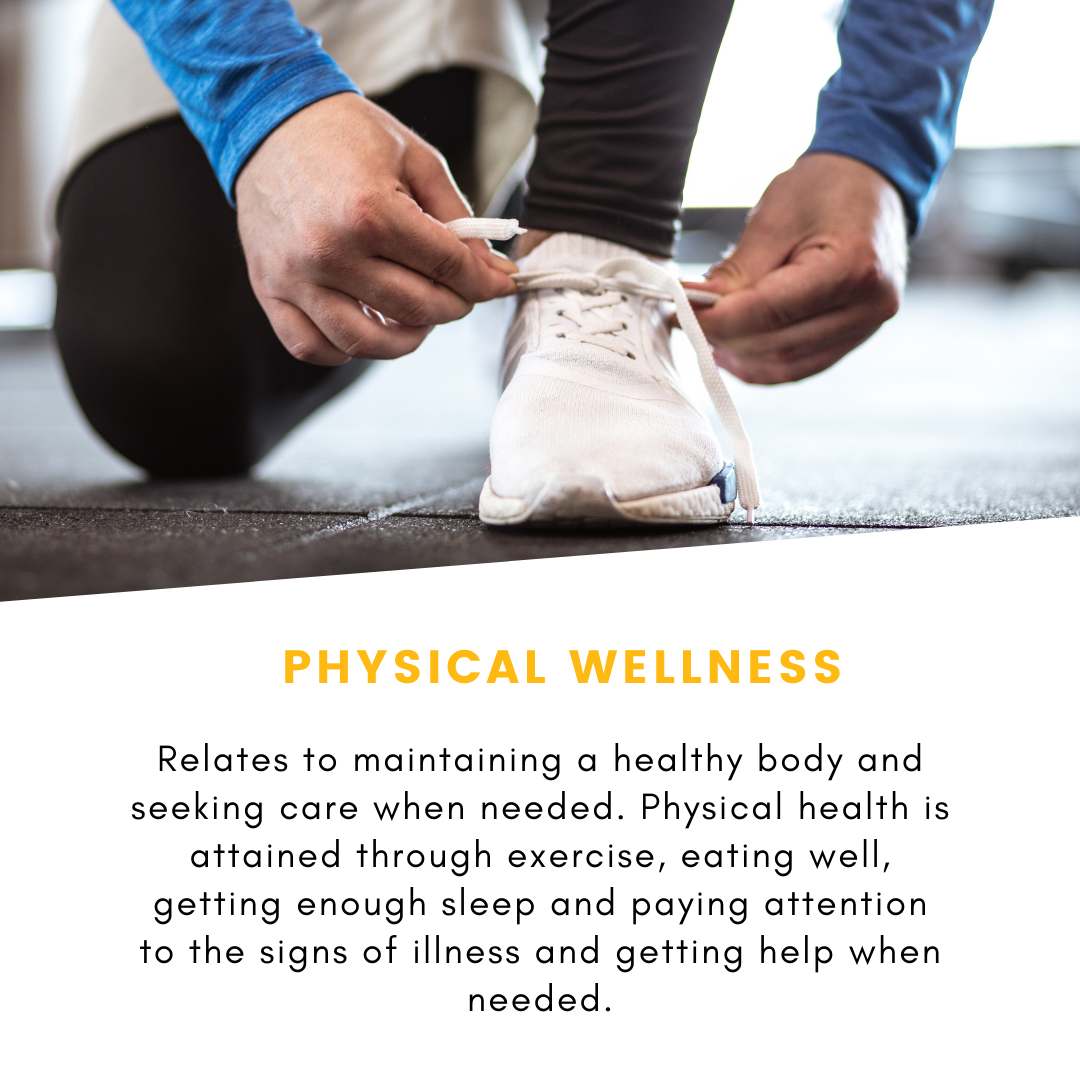
- Relates to maintaining a healthy body and seeking care when needed. Physical health is attained through exercise, eating well, getting enough sleep and paying attention to the signs of illness and getting help when needed. Physical Wellness includes:
- Getting regular exercise
- Feeling comfortable with your body
- Seeing your doctor regularly
- Keeping your blood pressure at the optimal level
- Eating healthy food
- Being aware of how sleep and stress can affect you
- Making your own choices about your physical health
- Stress reduction
- Developing healthy habits
- Seeking medical care when appropriate
- Seeking medical care when appropriate
- Being responsible with alcohol, cigarettes, and other substances
- Sleeping enough
- Taking any medications prescribed by your doctor
- Understanding how your body works
- Environmental Wellness
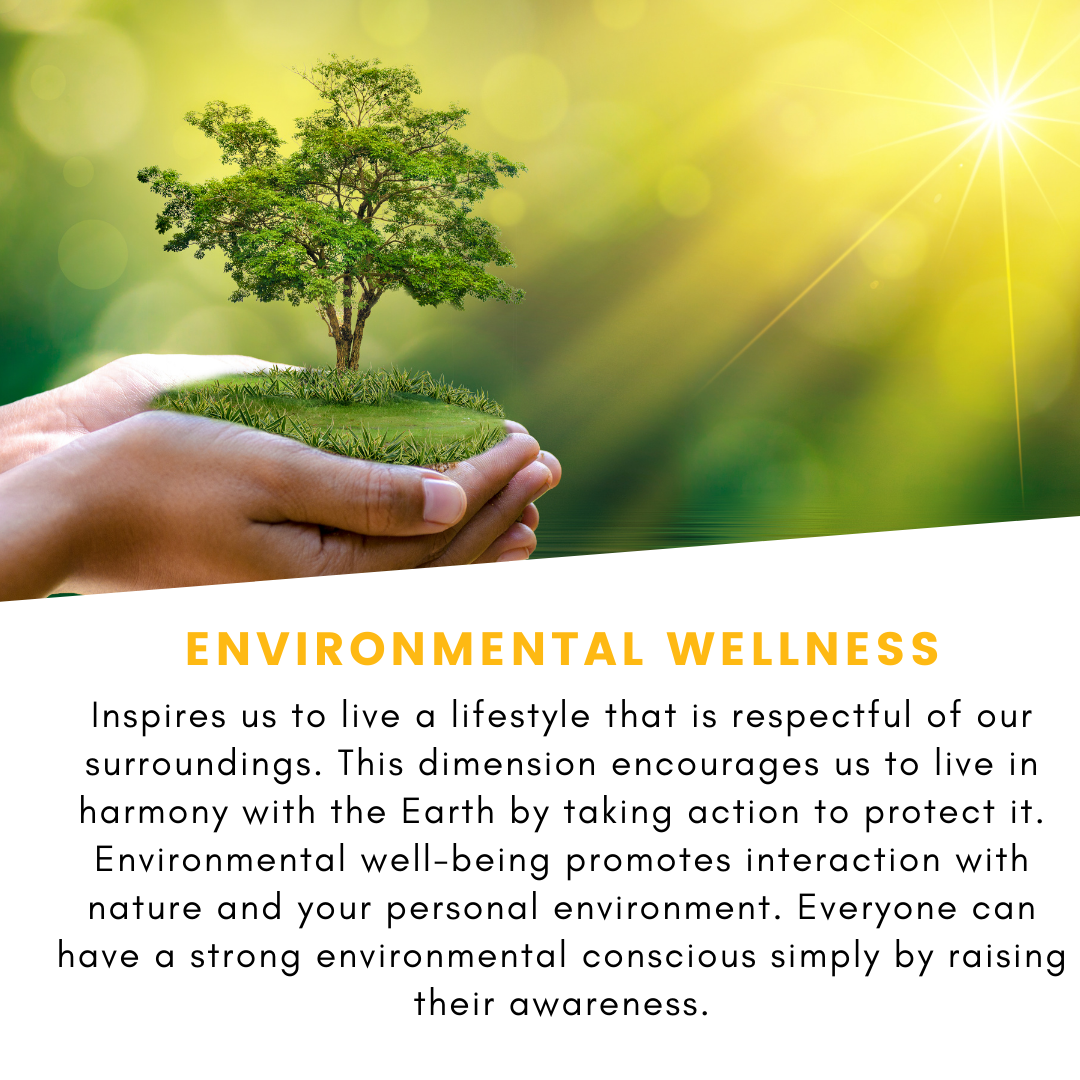
- Inspires us to live a lifestyle that is respectful of our surroundings. This realm encourages us to live in harmony with the Earth by taking action to protect it. Environmental well-being promotes interaction with nature and your personal environment. Everyone can have a strong environmental conscious simply by raising their awareness. Environmental Wellness includes:
- Making sure your home is de-cluttered
- Spending time outside
- Using eco friendly products
- Recycling
- Having a peaceful home environment
- Involvement in the community
- Being aware of how you might contribute to pollution.
- Environmental awareness
- Being aware of climate change and how human beings impact the environment.
- Financial Wellness
- Involves the process of learning how to successfully manage financial expenses. Money plays a critical role in our lives and not having enough of it impacts health as well as academic performance. Financial stress is repeatedly found to be a common source of stress, anxiety, and fear. Staying on top of your finances is important for improving your everyday life. Financial Wellness includes:
- Maintaining a budget and monitor your spending.
- Seeking out professional financial help if needed
- Exploring ways to save money.
- Being financially responsible
- Paying bills on time
- Reviewing credit reports and bank statements
- Being financially literate
- Occupational Wellness
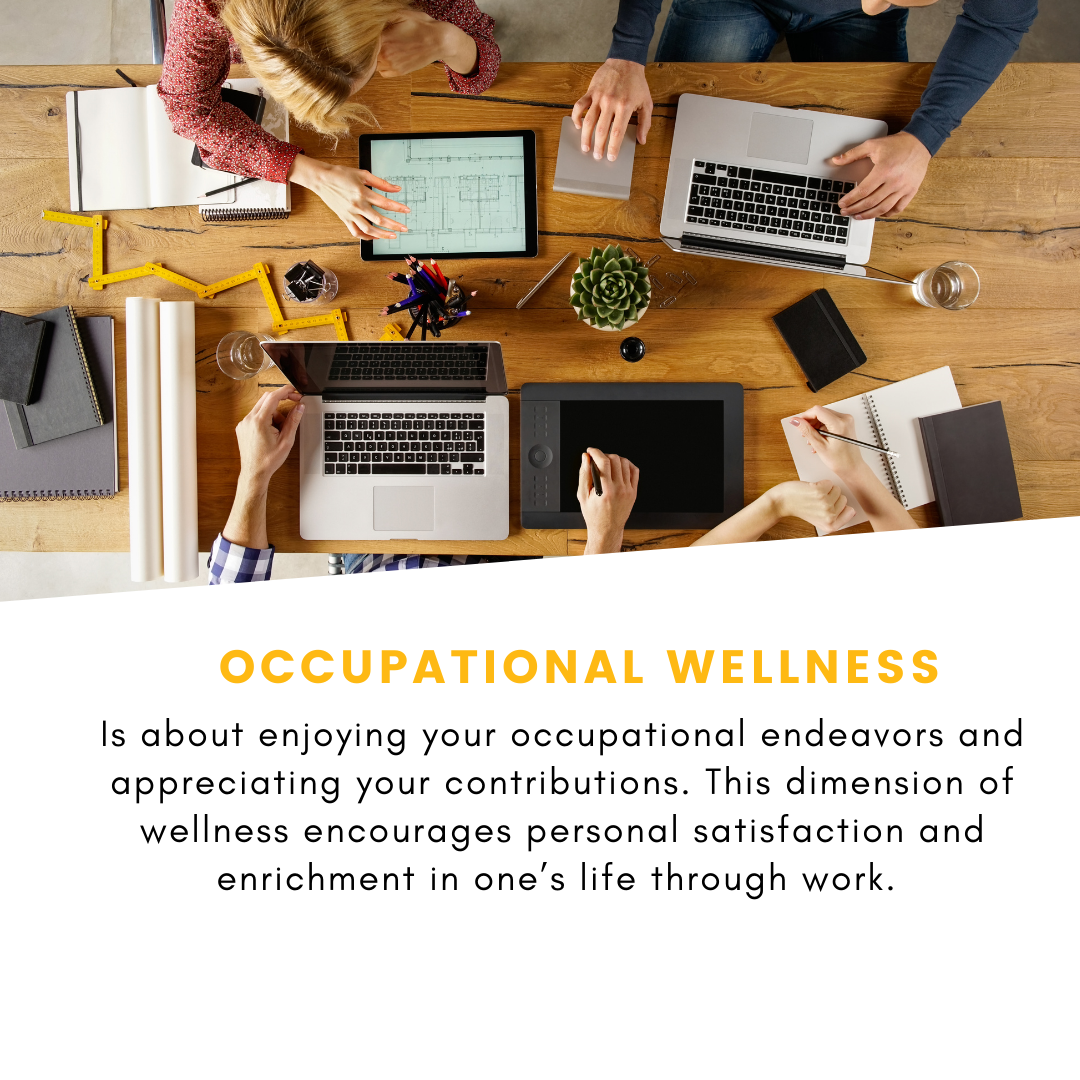
- Is about enjoying your occupational endeavors and appreciating your contributions. This dimension of wellness encourages personal satisfaction and enrichment in one’s life through work. Occupational Wellness includes:
- Taking personal satisfaction in your occupation
- Having a good balance of work and leisure
- Learning to communicate effectively with other people.
- Developing good work habits and job-related skills
- Exploring career opportunities or volunteer opportunities that you are passionate about
- Setting career goals
- Learning mistakes and moving forward
- Challenging societal expectations and fighting against barriers (e.g. barriers for women in the workplace)
- Social Wellness
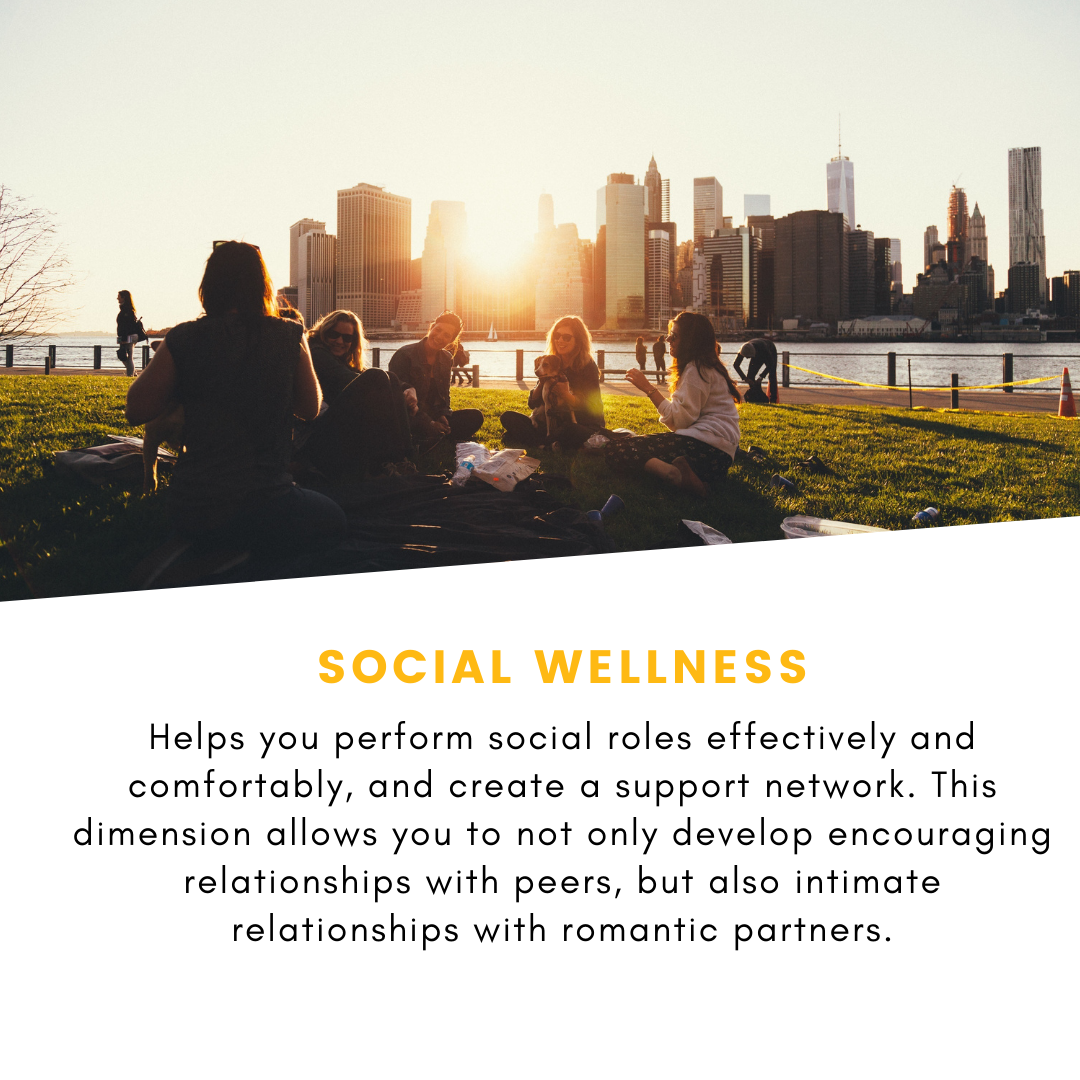
- Helps you perform social roles effectively and comfortably, and create a support network. This dimension allows you to not only develop encouraging relationships with peers, but also intimate relationships with romantic partners. Social Wellness includes:
- Take part in a club, social group, or volunteer group
- Focus on maintaining social connections by keeping in touch and staying connected with others
- Being able to interact with a diverse group of people
- Being aware of your impact in your community
- Understanding sex and gender roles and stereotypes surrounding them
- Being able to draw boundaries with yourself and others
- Having a strong support network of family, friends, co-workers, and peers
- Developing positive relationships
- Having good communication skills
- Being able to reach out to others for support and ask for help when needed
- Helps you perform social roles effectively and comfortably, and create a support network. This dimension allows you to not only develop encouraging relationships with peers, but also intimate relationships with romantic partners. Social Wellness includes:
- Is about enjoying your occupational endeavors and appreciating your contributions. This dimension of wellness encourages personal satisfaction and enrichment in one’s life through work. Occupational Wellness includes:
- Involves the process of learning how to successfully manage financial expenses. Money plays a critical role in our lives and not having enough of it impacts health as well as academic performance. Financial stress is repeatedly found to be a common source of stress, anxiety, and fear. Staying on top of your finances is important for improving your everyday life. Financial Wellness includes:
- Inspires us to live a lifestyle that is respectful of our surroundings. This realm encourages us to live in harmony with the Earth by taking action to protect it. Environmental well-being promotes interaction with nature and your personal environment. Everyone can have a strong environmental conscious simply by raising their awareness. Environmental Wellness includes:
- Relates to maintaining a healthy body and seeking care when needed. Physical health is attained through exercise, eating well, getting enough sleep and paying attention to the signs of illness and getting help when needed. Physical Wellness includes:
- Involves having an open mind when you encounter new ideas and continuing to expand your knowledge. It encourages active participation in scholastic, cultural and community activities. Intellectual Wellness includes:
- Allows you to develop a set of values that help you seek meaning and purpose. Spirituality can be represented in many ways, for example, through relaxation or religion. But being spiritually well means knowing which resources to use to cope with issues that come up in everyday life. Spiritual Wellness includes:
- Relates to understanding your feelings and coping effectively with stress. It is important to pay attention to self-care, relaxation, stress reduction and the development of inner resources so you can learn and grow from experiences. Emotional Wellness includes:
- There are 8 different dimensions of wellness.
-